Why Tea?
In Japan, Matcha drinking is not a drink. It’s a practice.
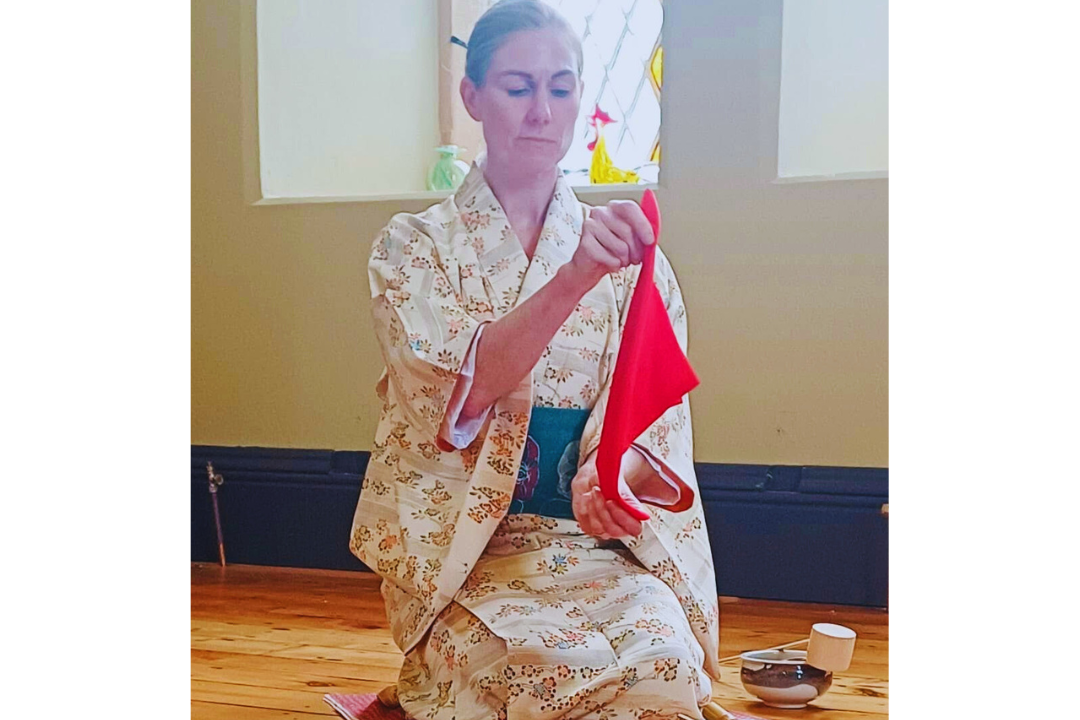
The simple act of preparing matcha — measuring, whisking, offering — has been refined over five centuries into one of the most considered rituals in human culture. And at the heart of it is something quietly radical: one person giving their complete, unhurried attention to another. Nothing held back. No agenda. Just this bowl, this moment, this person in front of me.
That is why tea.
What the ceremony does
Before the first sip, something has already shifted. The slow rhythm of preparation — the sound of water, the smell of fresh matcha, the deliberate movement of the whisk — asks your nervous system to do something it rarely gets to do: stop. Not pause. Stop.
The four guiding principles of Sadō, the Way of Tea, are harmony (wa), respect (kei), purity (sei), and tranquillity (jaku). These are not abstract ideals. They are felt, physically, in the room. Most people leave a tea ceremony surprised by how different they feel — quieter, more present, more themselves — and unable to fully explain why.
What matcha offers
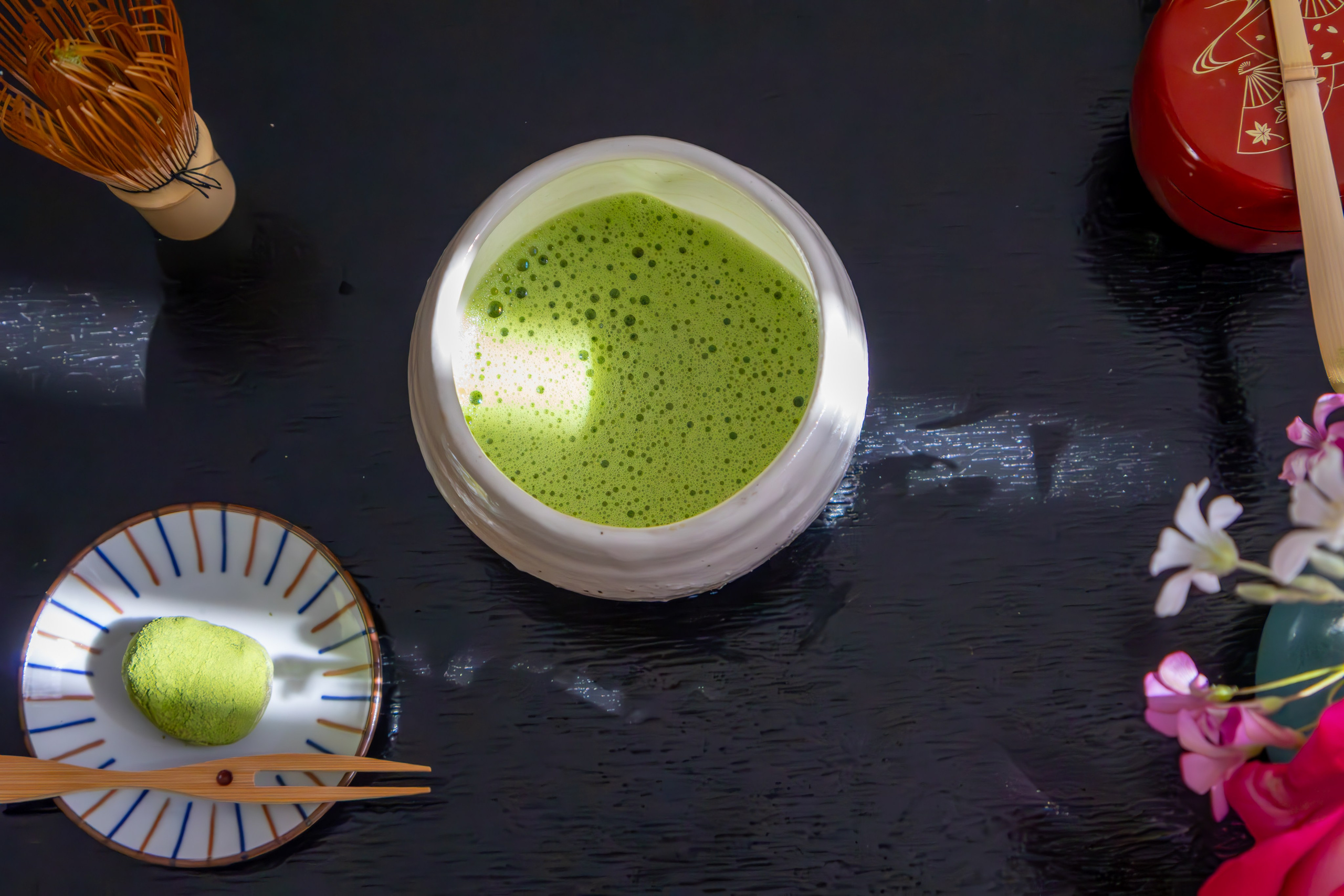
Beyond the ceremony, matcha itself is remarkable. Grown in shade, ground to a fine powder, and consumed whole rather than steeped and discarded, it carries a concentration of goodness that brewed tea cannot match. The amino acid L-theanine promotes calm alertness — the rare combination of focus without anxiety, energy without the crash. The antioxidant content is among the highest of any food. And the simple ritual of preparing it — even at home, even alone — creates a small island of intention in the middle of an ordinary day.
Tea as Omotenashi
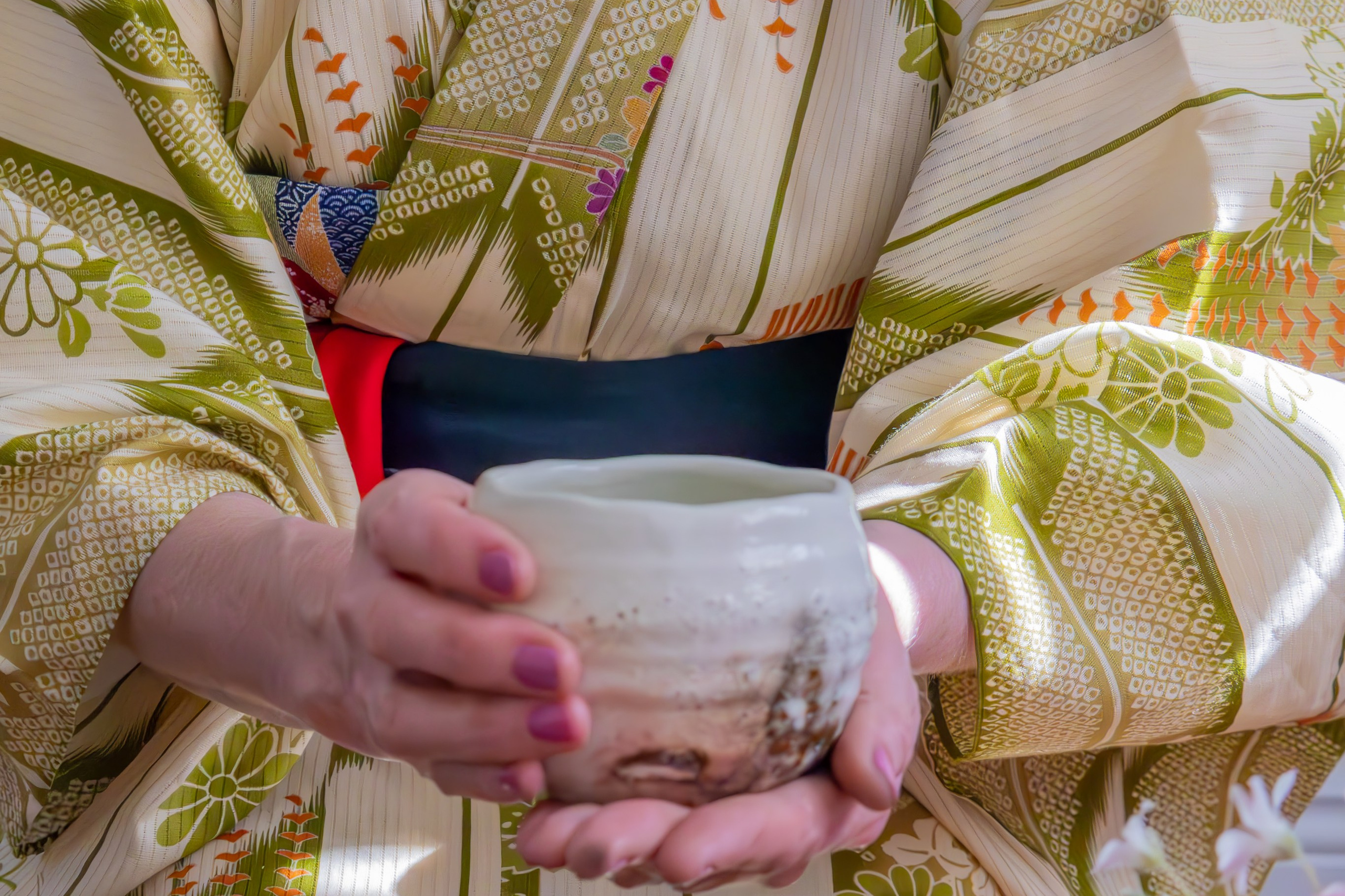
There is a Japanese word — Omotenashi — that means welcoming another person with nothing held back. No performance, no hidden agenda. Just wholehearted presence and care. Tea ceremony is Omotenashi in its purest form: one person preparing something with complete attention, offering it with both hands, and asking nothing in return except that you receive it.
This is what I try to bring into every session — whether a private ceremony, a retreat gathering, a corporate Soegama event, or simply a cup of matcha shared before a yoga class. The tea is the vehicle. Presence is the point.
Experience it for yourself
Tea ceremony is available as a private one-to-one session, combined with yoga, or as part of a retreat or corporate event. Online sessions are also offered for those who want to learn the practice from home.